
Soba Declaration!
For international travelers, Japanese ramen seems to be particularly popular, but I would definitely recommend soba to myself and would like to encourage travelers and foreigners to eat and experience soba more. I myself am completely a Soba fan, and if I were to compare Soba and Ramen, I would say that I eat Soba more often than Ramen, about 40 to 3. Japanese ramen is delicious, but I cannot eat it every day. This is partly because of health considerations, but also because of the greasy taste. On the other hand, I would like to eat refreshing Soba every day as a pure desire from the viewpoint of health as well as taste and deliciousness, and I can eat it every day. In fact, I know many Japanese who eat soba every day.

What is Japanese “Soba”?
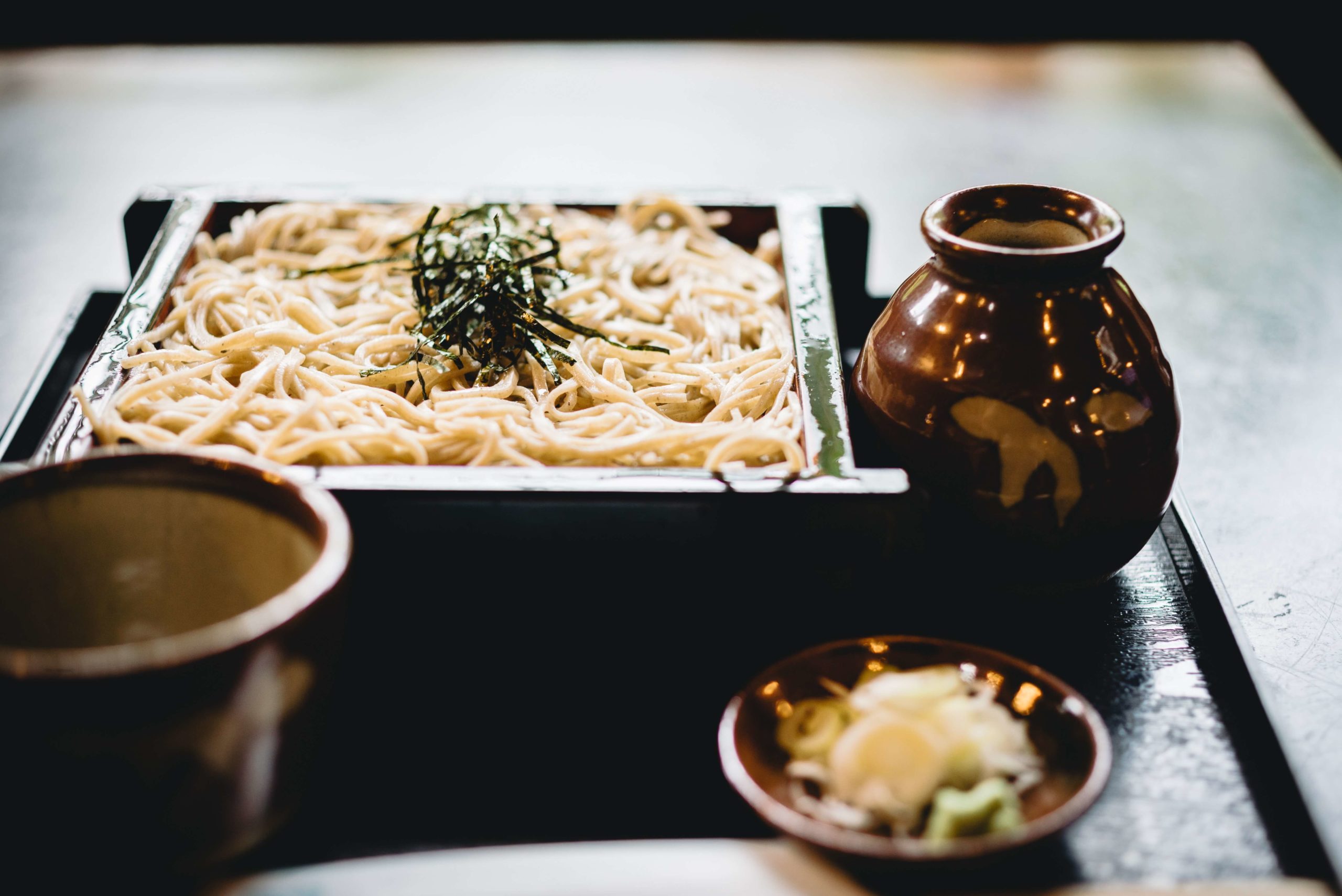
Japanese soba is a staple food and a widely consumed ingredient in Japanese cuisine. Soba is a grain made from milled buckwheat seeds and served as noodles with an elongated shape. Soba noodles are usually boiled in hot water or served cold. Boiled soba is called kake-soba, and is served with warm soba-tsuyu (soup stock). Cold soba is called “zarusoba” and is served in a colander with soba sauce. Soba-tsuyu is made with soup stock made from dried bonito flakes and kelp, and seasoned with a soy sauce base. Soba is sometimes served with various condiments. Typical condiments include wasabi (Japanese horseradish), chopped green onions, and grated radish. These condiments can be added to soba-tsuyu for flavor and spiciness. Soba is characterized by its aromatic flavor and unique texture, and has a refreshing taste. Soba is also highly nutritious, containing dietary fiber, vitamins, and minerals. Soba restaurants can be found throughout Japan, serving traditional buckwheat noodles. Soba is also known as the dish of the four seasons in Japan, and visitors can enjoy seasonal soba dishes and events.
All in all, Japanese soba has become a traditional dish loved by many people for its flavor, texture, and health considerations.
Japanese Summer and Soba
Summers in Japan are very hot. And it seems to be getting even hotter these days. In a hot place, one’s appetite is not so good, and it is difficult to choose what to eat. In other hot Asian countries, people like to eat spicy food to beat the heat, but I myself feel that this makes my stomach tired. In the boiling heat, I would rather eat cold soba than hot ramen. In the heat of the day, you want something cool to eat, and cold Japanese soba is the perfect choice.
Soba and Tempura
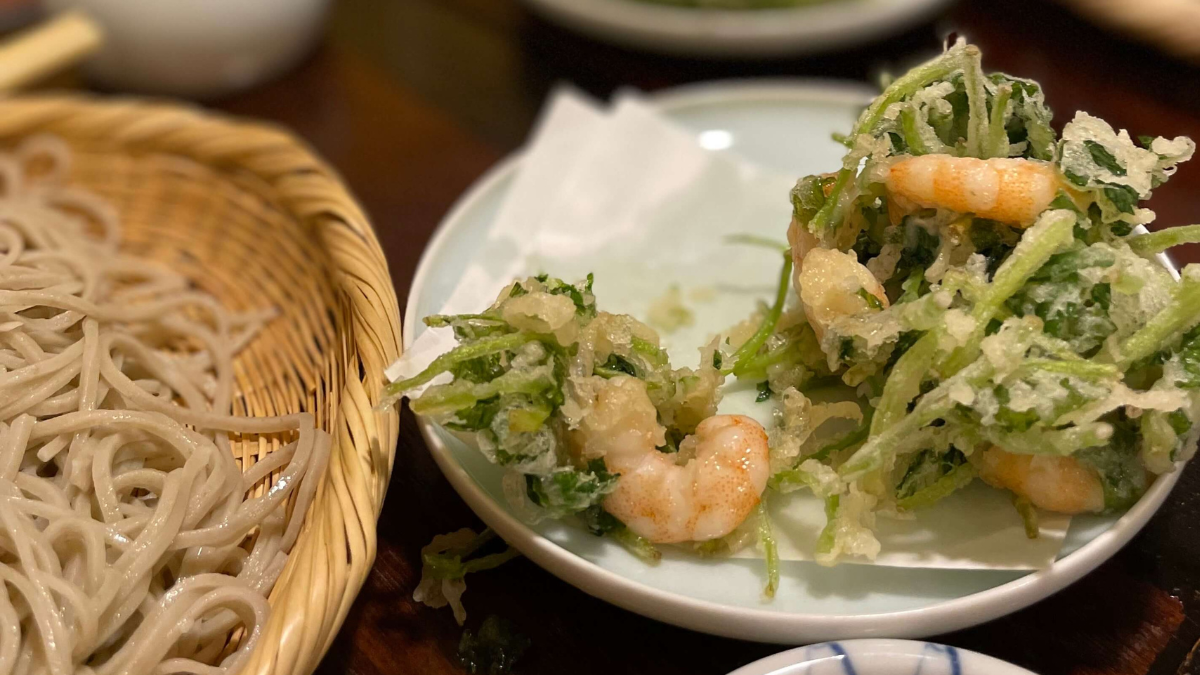
If I had to choose a dish from the Soba menu, I would definitely choose “Tenzaru”. And I also recommend “Tenzaru” to beginners. “Tenzaru” is a set of cold soba noodles and tempura. It is a little-known fact among tourists and foreigners that freshly fried tempura is available at soba restaurants in Japan at a very reasonable price. There is no need to book a table at a fancy Japanese restaurant to eat tempura. By stopping by any soba restaurant in Japan, you can easily enjoy crispy, freshly fried, delicious tempura and delicious soba noodles for around 1,500 yen anytime, anywhere. As long as there are soba restaurants in Japan, I feel like I could stay here forever.
Bring the crispy fried tempura in sesame oil to your mouth and bite into it, feeling the savory and delicious flavor that fills your mouth. After finishing that bite, I quickly dip the cold soba into the dashi broth and bring it to my mouth. The mouth, which had been spread with the savory oiliness of the tempura, is now filled with the coolness of the soba. This is truly a miraculous marriage. The refreshing aftertaste of eating soba now calls for the rich flavor and oiliness of tempura, and the rich aftertaste of tempura now calls for the aroma of soba and dashi broth. It will truly be like a permanent institution of food.
Soba and Sake
Japanese people often enjoy soba and sake at the same time. In this case, the sake is called “chilled sake – reishu,” which is a refreshingly cold sake. This is also a must-try for international travelers and others. The cycle of “Tempura”, “Soba”, and “Cold Sake” is a spiral of happiness! There is something magical about sipping cold sake in a small sake cup with tempura and soba noodles. Drink cold sake, meditate on each small sip, and feel the moment and the passage of time. In the aromatic aftertaste of cold sake, the brain now begins to search for the lingering taste of tempura and soba. Then the next cycle of “tempura,” “soba,” and “cold sake” begins. Once you experience this cycle, you look forward to another day’s soba opportunity, can’t wait for the next one, and can’t wait for the next one. In a sense, it was a “sustainable” soba trip.

Soba and a Sense of Quiet Time
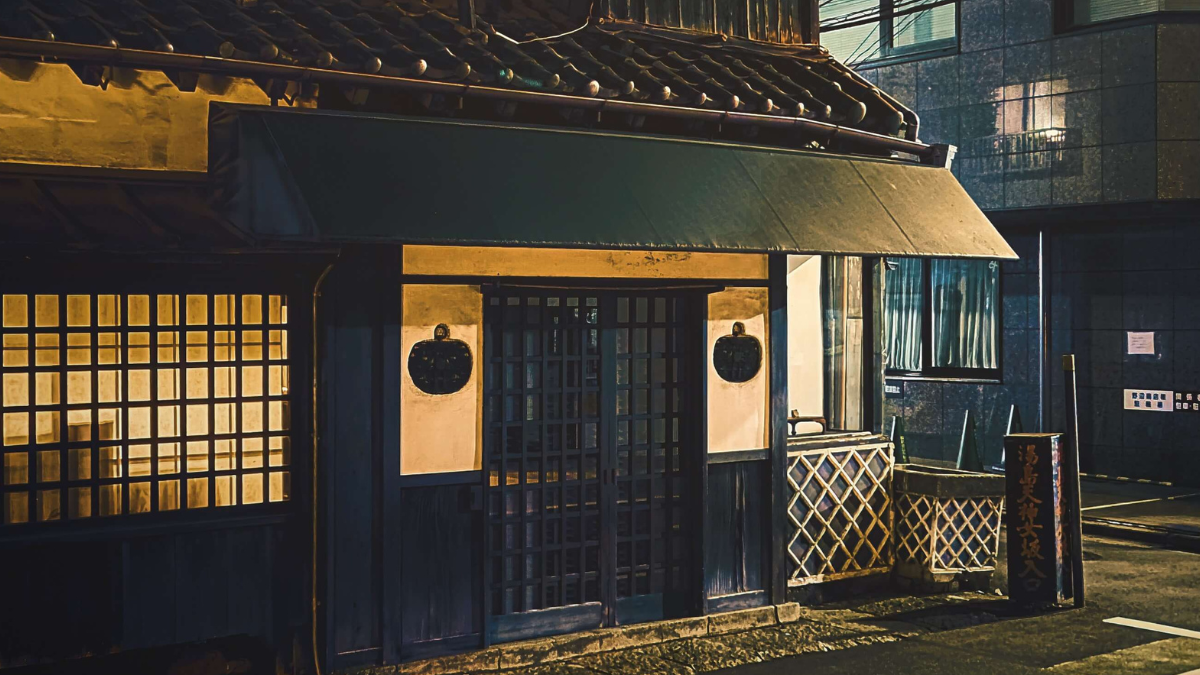
The time to visit a Japanese soba restaurant should be during the daytime rather than at night. For some reason, eating soba while it is still daylight makes me feel very satisfied. Lunch is definitely better than night. Inside a Japanese soba restaurant, time seems to flow in a leisurely manner, which is strangely relaxing. When you drop in on a soba restaurant from the bustle of a noisy city, you feel as if you are connected to the ancient time and space of Japan. Its serene atmosphere makes me feel very relaxed. At the table next to us, we could see a gentleman enjoying soba noodles and sake. Each of them seems to be enjoying a very intimate moment. When I meet people who enjoy Soba and Sake at Soba Restaurant, I have a feeling. They seem to be enjoying “time” apart from soba and sake. They seem to take in “time” as nourishment in addition to food. I think soba restaurants are also a “chic” way to spend time, as the Japanese call it.
How to Choose a Good Soba Restaurant
It is said that there are tens of thousands of soba restaurants in Japan. Naturally, there is a wide range among them. Some of them are like a stand in the station, and they are delicious, but they are too hectic and you can’t settle down. I hope you will find a good soba restaurant where you can enjoy soba in a relaxing atmosphere.
The first way to find a good soba restaurant will be to go to a soba restaurant that “has a large selection of sake”. A soba restaurant that lists a wide variety of sake on its menu at the front of the restaurant is likely to be a good soba restaurant.
The second point is the abundance of a la carte menus, known as “ippin ryori – one dish” in Japan. Japanese people often drink “cold sake” with this “one dish” as a snack. Typical menu items include “dashimaki tamago” and “roast duck.
The third point is that if you peek into the restaurant a little and can see the kitchen or if it is a counter type, you may be able to see the tempura being fried. Some restaurants use stocked tempura, not freshly fried, so it is advisable to choose a restaurant that fries tempura after ordering.
Recommended Menu
Tenzaru.
Tenzaru” is a popular dish served at Japanese soba restaurants.
Tenzaru is a dish combining “tempura” and “zaru soba”. Specifically, cold zaru-soba is served with tempura served on a separate plate. Tempura is mainly crispy fried vegetables and seafood, generally shrimp tempura and vegetable tempura.
Zaru soba is a style of cold buckwheat noodles served in a colander (zaru) and accompanied by soba sauce. Soba-tsuyu (buckwheat noodle soup) is made with soup stock made from dried bonito flakes and kelp, and flavored with a soy sauce base.
In tenzaru, the most common tempura ingredients are shrimp, pumpkin, eggplant, and shiitake mushrooms. The savory and crispy texture of the tempura complements the cold soba.
Tenzaru may also be served with scallions and wasabi as condiments. By dipping these condiments into soba sauce or tempura, you can enjoy the flavors and spiciness.
Tenzaru is especially popular during summer and hot weather. The combination of cold zaru soba and freshly fried tempura is refreshing and perfect for a hot day.
Soba restaurants offer a variety of other soba dishes, but tenzaru is one of the most popular and standard among them.
Dashimaki tamago
Dashimaki Tamago (dashimaki egg) is a dish often served at Japanese soba restaurants.
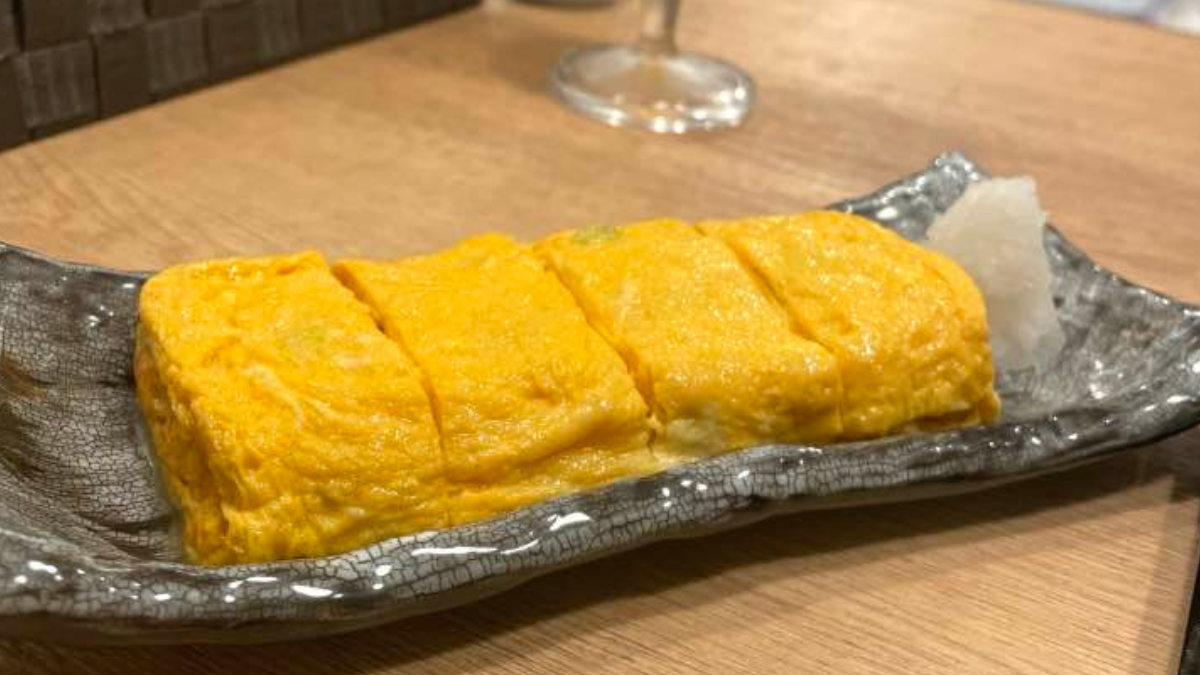
Dashimaki Tamago is a traditional Japanese dish made with egg and dashi broth. It is made by unrolling an egg and adding dashi (soup stock) to the mixture while baking it in a pan. Dashi is generally Japanese soup stock made from dried bonito flakes or kelp.
Dashimaki Tamago is characterized by its fluffy texture and mild flavor. The combination of the egg and dashi broth provides a rich flavorful taste.
At soba restaurants, dashimaki tamago is served in a variety of forms. Different soba restaurants offer different styles and variations of dashimaki tamago. Dashi maki tamago, or rolled egg with dashi broth, is enjoyed as part of Japanese cuisine and goes well with soba noodles.